The story continues with Susie’s Higher Self first interrupting and then participating in a talk given by her Grampa Izak, at which her parents were present…
Susie
Susan is shifting in me again. This time I feel different—I am closer to her. I knew it would happen someday. Energy flows into me—from her. Knowing it is from Susan reassures me, but my head feels crowded. I am still me, but I am connecting more to the older version of me I am becoming. I don’t know everything she does yet…
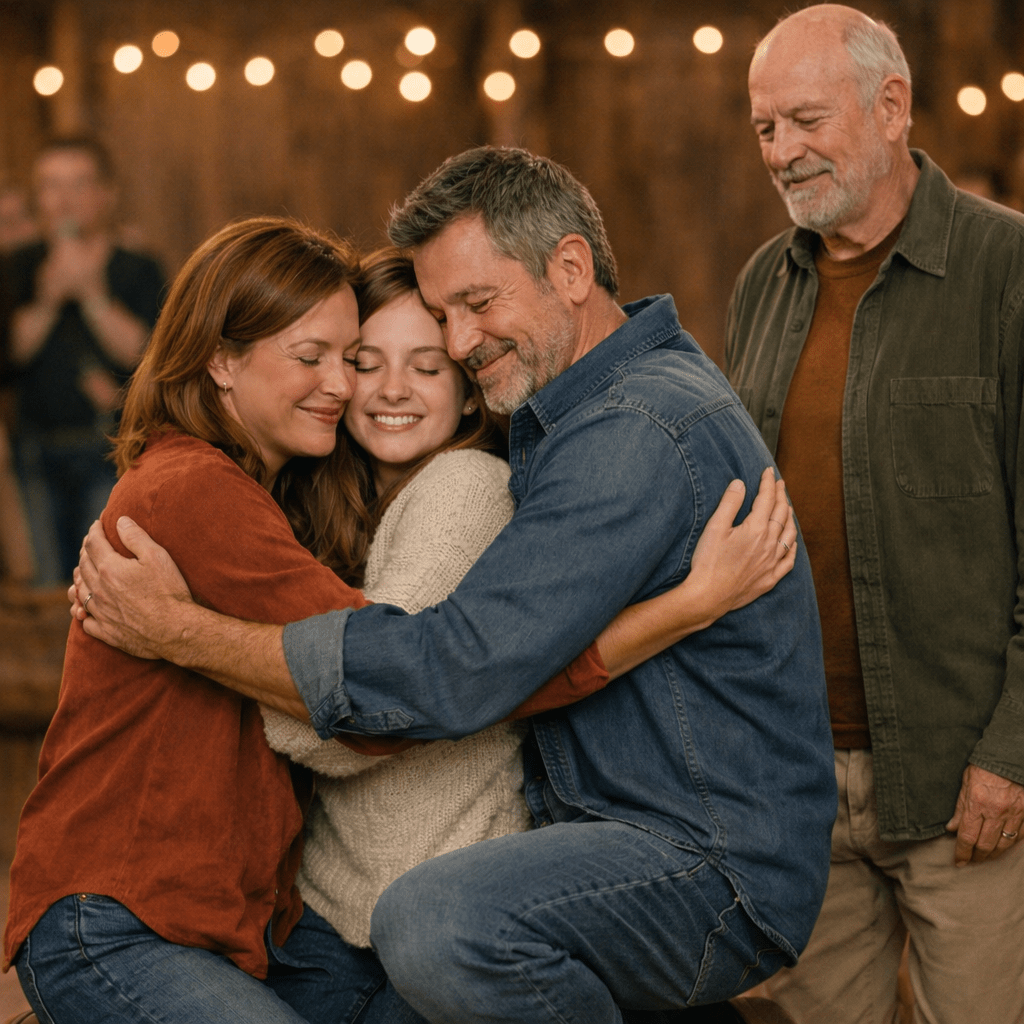
Mom and Dad are coming toward me. They are beaming, but a hint of sadness in my mom’s smile betrays the tears they’re both holding back. Now I get it. Somehow, they both know I am older. Mom is proud, but sad.
Mom kneels, her head tilted as if she’s looking at a stranger. “I’m still here,” I say, the words feeling heavy in a mouth that was just hers. “I’m just… more.”
“Is it okay if we still call you Susie?”
“Of course.” As she pulls me in, her perfume—A subtle, clean, and timeless rose scent—washes over me. I recognize the scent, but it is Susan’s memory, not mine…
My novel continues… At the age of 10, Susie had just taken the next step toward becoming aware of her “Higher Self.”
Izak
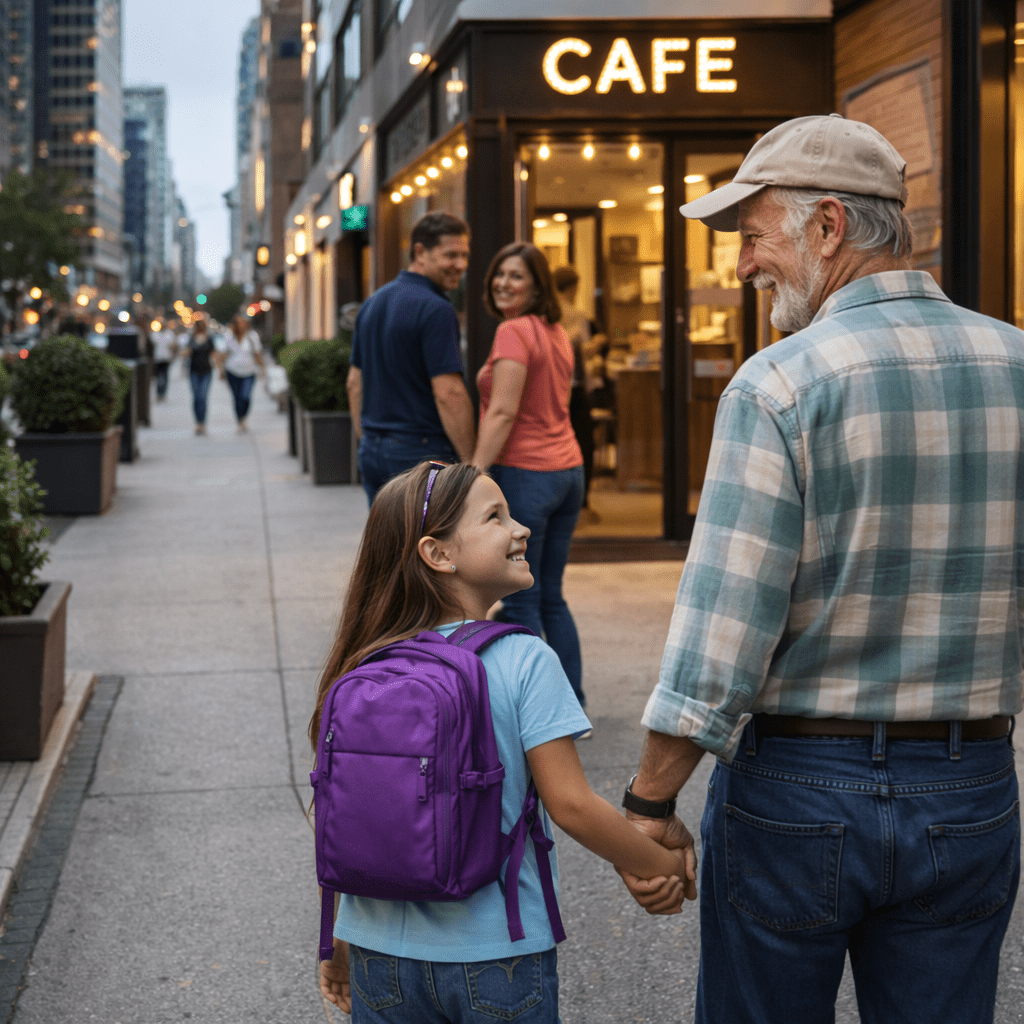
After my talk at the center, Jake invited me to go to that café down the street from Matt and Lisa’s Place with him, Rose, and Susie. Susie and I were walking together, several steps back from Jake and Rose. Susie would usually have run to the corner first, then looked back at us. This time, she was hanging back with me, holding my hand as we walked… the distance between her parents and us increasing. It’s hard for me to think of her as Susie after what happened just now—how she talks—a grown-up in a child’s body. We stop. Susie tilts her head up at me the way she does. Actually, now that I have seen Rose do the same thing, I realize Susie may have gotten that gesture from her mom.
“Izak?”
“Yes—Susie?”
“If it will help, you can call me Susan. I feel more like her now.”
“Okay. I will try that. By the way, did you know I was thinking about that just now?”
“I had an idea about it, yes. Don’t get me wrong, though. It isn’t as if I was reading your mind, or anything like that. I was only applying how I feel about what happened earlier, to how you might feel interacting with me now.”
She turned to gauge the widening lead her mom and dad had on us, tugged my hand, and we resumed our walk at a faster pace. “Susie—This will take a while. Susan, your way of talking, vocabulary, and sentence structure are so different. And your understanding of how my earlier interaction with you may have changed how I relate to you now is so… unlike that of someone your age might have. Do you know why that happened?”
“Not really, Izak. Susie understands only that it is from her other self, and that physically, she is the same. The Susie part of me is developing a better sense of her older self, how she thinks, and how we will be as we continue our merging. It feels weird to me, as well, but also natural. One thing I have become aware of is that, as Susie, I had always mispronounced your name as, I-Zak.”
“Susan… I always thought the way you said my name was endearing.” She tilted her chin and let her head drift in a slow, knowing bob, an unconscious echo of her grandmother Emily’s mannerisms.
“At first, Susie knew she had said it wrong. Nobody corrected her. Besides that, she noticed that you laughed the first time she said your name that way. It made her feel good to hear you laugh.”
“So, after that, she said it wrong on purpose—You have me doing it now. Is how you are talking about Susie in the third person intentional?”
“Yes, it is. It is inevitable at this point as Susie and I continue to merge, and she takes on more of my personality. Her saying your name the way she did is a simple example of one of her quirks that I no longer need. The changes you see are due to me, taking more control.”
“I do miss how Susie used to call me Grampa, though.”
Susan and I had nearly caught up to her parents by the time Jake held the door for Rose. As we reached the entrance, I turned to her, preparing to open the door for her. The corners of her mouth quirked up, and stifling a laugh, she said, “I-Zak—if you stick with calling me ‘Susan,’ then I’ll call you ‘Grampa Izak.’”
When I met Judy, I knew my life would be changed forever.
She was “The One.” I knew it after talking to her for only five minutes. And I thought I could tell that she knew the same thing. I wouldn’t have to prove her search was also over; she already knew.
Three years earlier, I had moved from the San Francisco Bay Area to my new hometown, about 90 miles north of Sacramento. It had taken several short-term jobs to find a permanent one at a retail nursery. It didn’t pay much, but for the first time since my move, I knew I was committed to staying here. I was also fine with the pay because the job was at least related to my Forestry degree from UC Berkeley.
Working at a nursery isn’t what I had planned for my degree. I had several jobs during my upper-division college classes and a couple of temporary forestry jobs after graduation. Things had gotten a bit weird: trying to find forestry jobs, being laid off after the season, collecting unemployment while trying to get jobs unrelated to forestry to satisfy unemployment insurance requirements…
On March 19, 1983, I was filling in for a coworker who was out. I had just finished with a customer and returned outside to the sales area. I saw a flash of red hair to my left. I had always had a thing about redheads. And this redhead looked like she needed help. Of course, I got over to provide that help before any of my other coworkers got to her. I only ignored three other customers on my way to her.
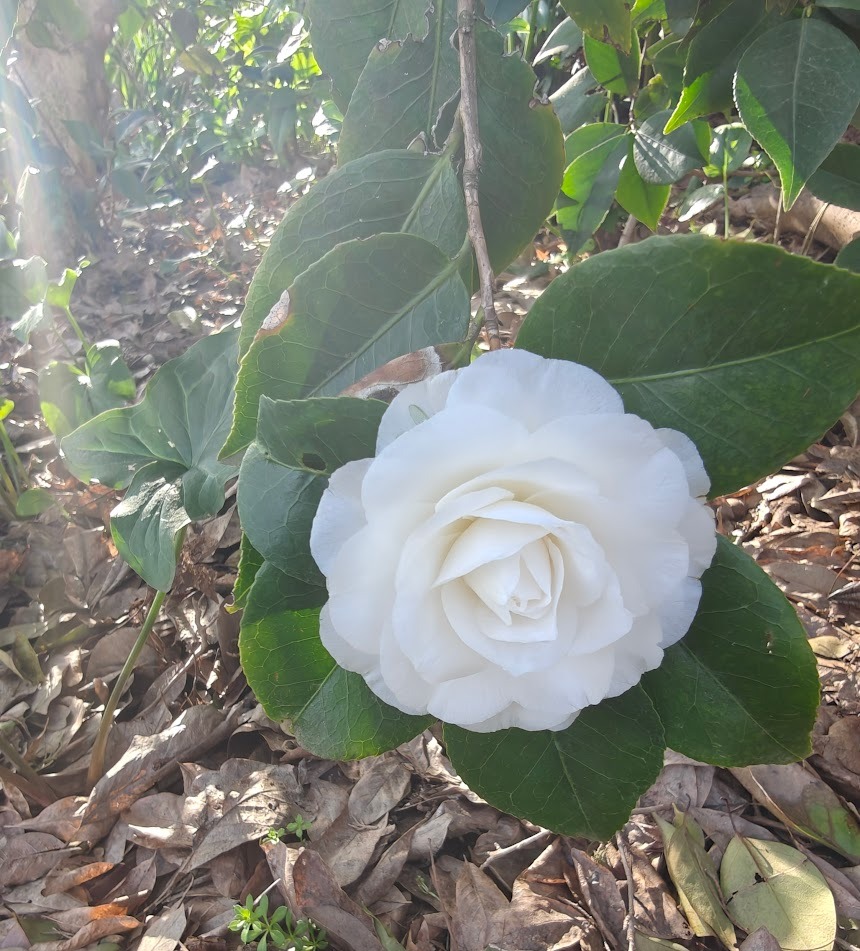
She was looking for a white camellia in bloom. It had to be blooming because she needed proof it really was white. I didn’t blame her. I knew that we had gotten mislabeled plants from wholesale nurseries before. We didn’t have anything blooming in the main sales area. I told her I had seen some white camelias in our “growing area.” I told her to follow me, and I would find one for her.
This nursery was one of the older ones in town, and it had an extremely narrow sidewalk from the front sales area to the lath house, our growing area for camelias, so we had to walk single file. On the way, she asked me a question. Without thinking about this or how important it was to our potential future together, I flipped around and walked backward as I attempted to answer her question.
Continuing to the camellia area, I found several white camellias in bloom and, at her request, chose the one I thought was the best. It was labeled as “Snow White.” She was happy. I was as well. I just knew she was interested in me. There was one problem, though… I hadn’t thought through how or when I would ask for her phone number. Ah, I had it. I would ask her when I carried her plant out to her car.
“Oh, that won’t be necessary. I walked, and this isn’t that much to carry. I don’t live far from here.”
I had blown my chance. She gave me cash for her purchase. While I waited briefly for my turn at the cash register, I saw that she was writing something on a piece of note-paper she had asked another employee for. I rang up the sale and walked back to her, giving her change and a receipt. She put her change away, and before she turned away from me, she reached up and put that small piece of paper in my shirt pocket.
“Who was that, Richard. Do you know her?”
I took the paper out of my pocket, unfolded it, and saw her name, address, and phone number. I held it up to show my coworkers and said, “I do now…”
It all seems like it happened yesterday. It was 43 years ago, last March 19th.
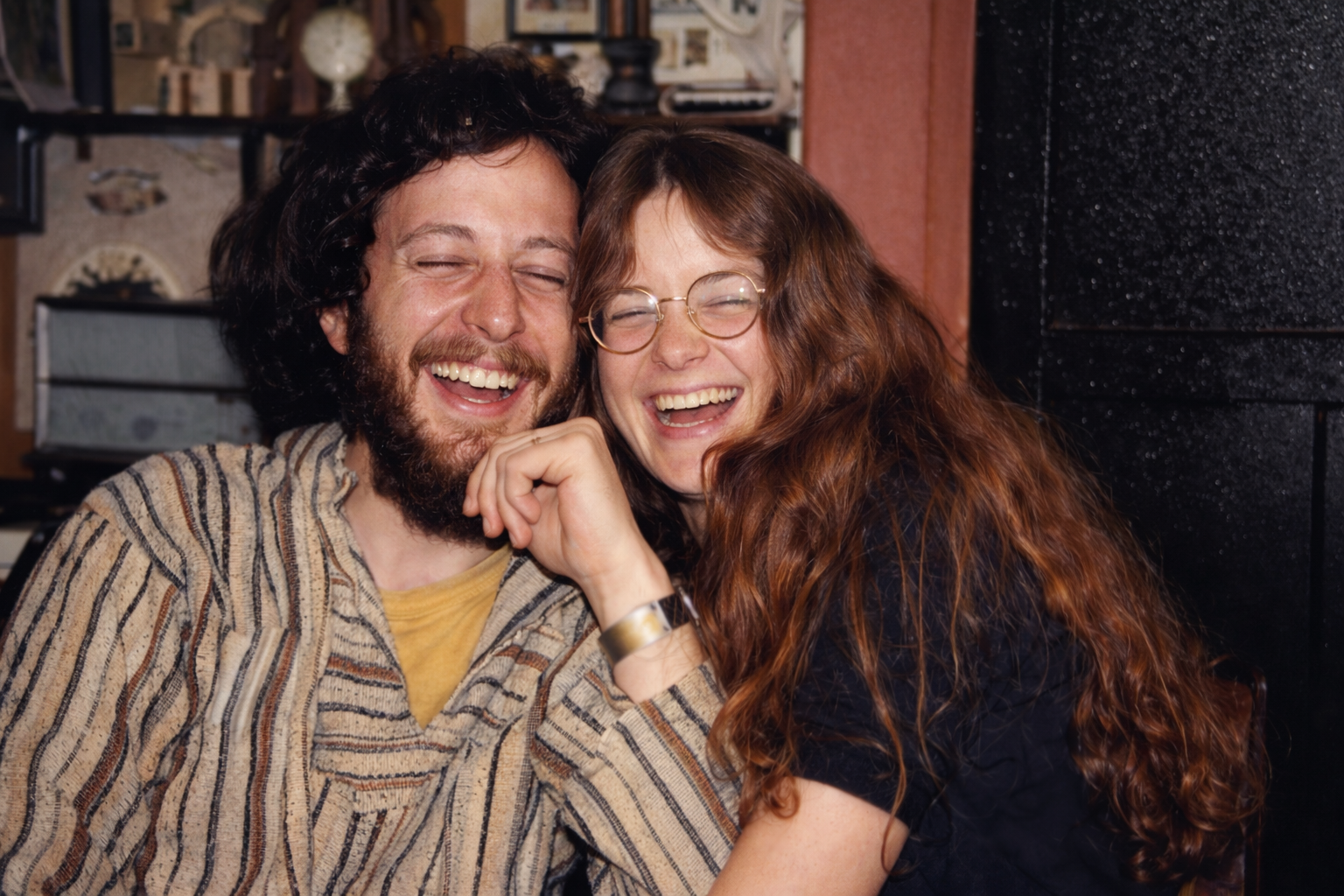
My mom took this photo of us a few months later. I have to admit, I took a picture of my mom’s snapshot, and the original is out of focus. This was enhanced using WordPress’s AI.
Our time together was magic.
She developed many health issues in the last few years of her life. One of those things impacted her memory. But one thing she never forgot was how I walked backward on the day we met, while I was taking her to find a white camellia in bloom.
Both of our lives were changed that day.
She passed away 7 years ago, after 36 years together.
(A note about the camellia: It had been labeled “Snow White.” It turns out it wasn’t that at all, but a “Nuccio’s Gem,” which, ironically, was a variety she would have preferred. It turned out we had one all the time, and I didn’t find out until about five years after her death.)
Work on my current “Work in Progress” continues. I am beginning to see where it is going, anyway.
Izak was wrapping up his remarks—at least, the part he’d shared with me. Susie hadn’t looked away from him once.
“Emily said she knew I’d understand,” he said, his voice straining. “That leaving us the way she did would be easier on everyone.” He caught his breath, holding it until it escaped in a sharp hiss that echoed through the microphone. He gave a small, tired chuckle and lowered his shoulders.
“Not really for you, Grampa I-Zak,” Susie’s small voice cut through the silence.
Rose leaned toward Susie and, grasping her shoulder, admonished her, “Susie, it’s not polite to interrupt people when they are speaking, especially here.”
Susie looked up at Rose, her eyes wide, then bit her bottom lip, turning away, staring down at the floor before her, before responding sorrowfully, “I’m sorry, Mommy.”
Izak uncurled his hold from the support of the podium and flexed his fingers before taking his first tentative steps toward our seats. Rose continued, “Susie, what do you say to Izak?”
“Rose, it’s okay.” Izak continued walking toward us. Rose’s shoulders relaxed. Izak stopped in front of Susie. His knees popped as he slowly lowered himself in front of her, smiling warmly, gazing at her as he said, “You are right about that, Susie.”
Susie grabbed either side of her folding chair’s seat and pushed down to scrunch herself forward so she could get her feet on the floor. She stood and encircled as much of Izak’s shoulders as she could in a warm hug, burying her face against his neck. “I miss Gramma Emi too, Izak.”
Izak let their hug linger before pulling back, his eyes moist. When he finally pulled away, the dampness in Izak’s eyes mirrored the heavy air in the room. He didn’t wipe them; he simply let the emotion sit there, raw and acknowledged, between him and Susie.
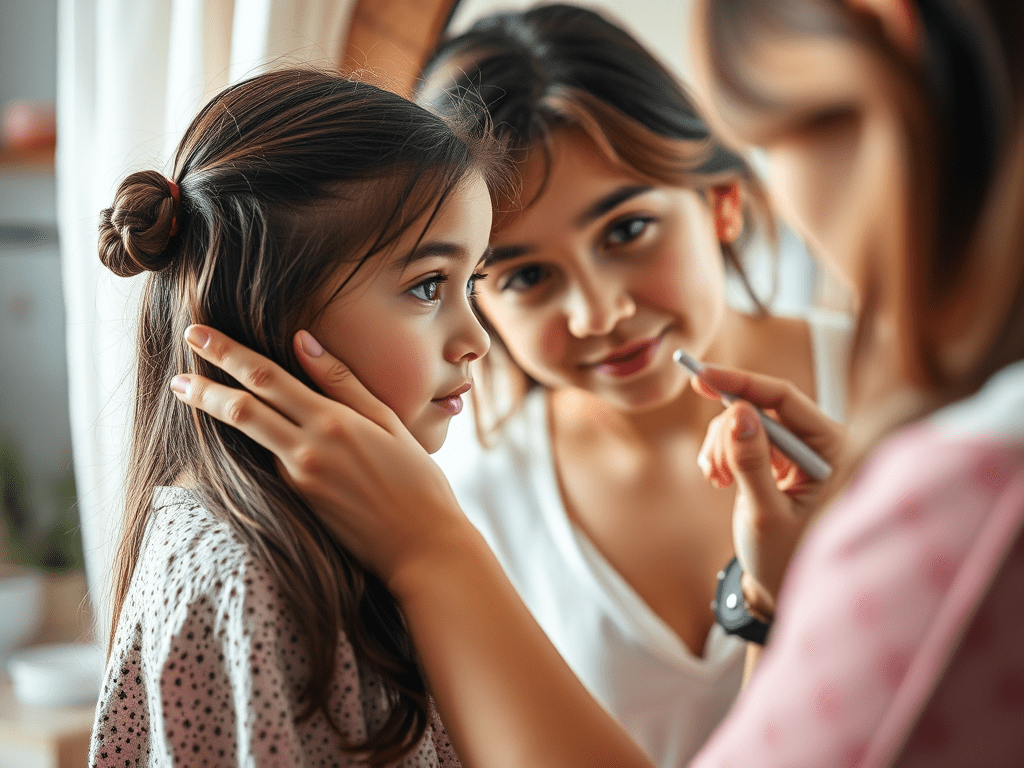
“Mommy?” Susie’s brow scrunched a bit, seemingly deep in thought. Or maybe she was just squinting against a stray hair. I tucked a lock behind her ear and kept brushing.
“Yes, baby?”
“Why are we here?”
“Do you mean, right now? We are getting you ready for school.”
“I know that. But more than that.”
“More than just school?”
“Yes. I understand I have to learn stuff. But why do I have to go to school? I know lots of stuff already.”
“I know that is true. You show me and Daddy that every day.”
“She knows lots of stuff, too.”
“She? Who do you mean?”
“Umm, the big me.”
I paused mid-stroke, the brush hovering over her shoulder. She said it so casually, as if she were talking about a friend from the playground. “Ah, I see—Does she talk to you about why you are here?”
“Umm… I guess. Not all the time. Sometimes the old me shows me stuff she calls ‘our lessons.’ It is like school.”
“Ah, maybe I understand what you are saying then. You wonder why you have to go to school here and wherever you go with your older self—Is that true?”
“Yes… I’m not complaining. I am only curious.”
“Your questions are what make you, you, Susie. Maybe you can see that ‘other you’ because you’re so good at looking for answers.” She cocked her head to the side, searching her own eyes in mirror’s reflection as if looking for the ‘big’ version of herself.
“Mommy, how do you know that?”
“I know because I remember hearing how it was for Grampa Matt and Lisa when they were your age. They had the same realization of who they were; that they had lessons to learn in their other existence.”
“Am I like them?”
“Sweety, I’m not sure about those things, but I suspect that to become that other version of yourself, you have to do well in school here as well as there.”
“Mommy, do the other kids go to school in other places like me?”
“I don’t know, sweety. They may.”
“Did you? When you were small, like me?”
“You know what, Susie? I don’t remember. But Grandpa Matt’s friend Lisa didn’t remember until he started working with her, so who knows?”
“I think Dad is starting to remember; he had some exposure to the concepts from Emily and Thomas, and later with Matt. I might be able to help both of you remember.”
The transition was that fast… My brushing stopped, my hand trembling. “Maybe—Maybe you can.” She didn’t look like a child in the mirror anymore; her eyes held a weight that didn’t belong in an eight-year-old’s face.
“I will see what I can do. And Mom, I know you and Dad were concerned about how this is impacting Susie—don’t worry about her. She is adjusting well, and knows to keep certain aspects of her other self private.”
“Thank you for sharing that, Susan. We were worried about that. This is weird…”
“Yes, it is strange for me as well. Susie is aware I am here, of course. Oh, Mom, it’s getting late. We should go…”
For the past month, I have not been able to make progress on my newest novel. Some may think of this as having writer’s block. I’m not sure I agree with that label.
I keep my Work in Progress in mind at all times when I am writing. I know that I will eventually find out what I need to do to continue. In the meantime, I usually reread what I already have, as if that may prime the creative process again. At least, I can see if the reason I am stalled relates to something I have already written. It might be something simple. It could also be a major logic error that is easier to fix now than waiting until the end.
I caught something in this one. I had started the first chapter of Part 3. I realized it should have been the last chapter in Part 2. Sometimes these things matter. Even finding that and fixing it didn’t move me to the point I could continue.
Yesterday, I had an idea about where I need to go from here. Sometimes, all it takes is having a different focus. If it takes a month to see the way forward, it is better than scrapping the entire thing.
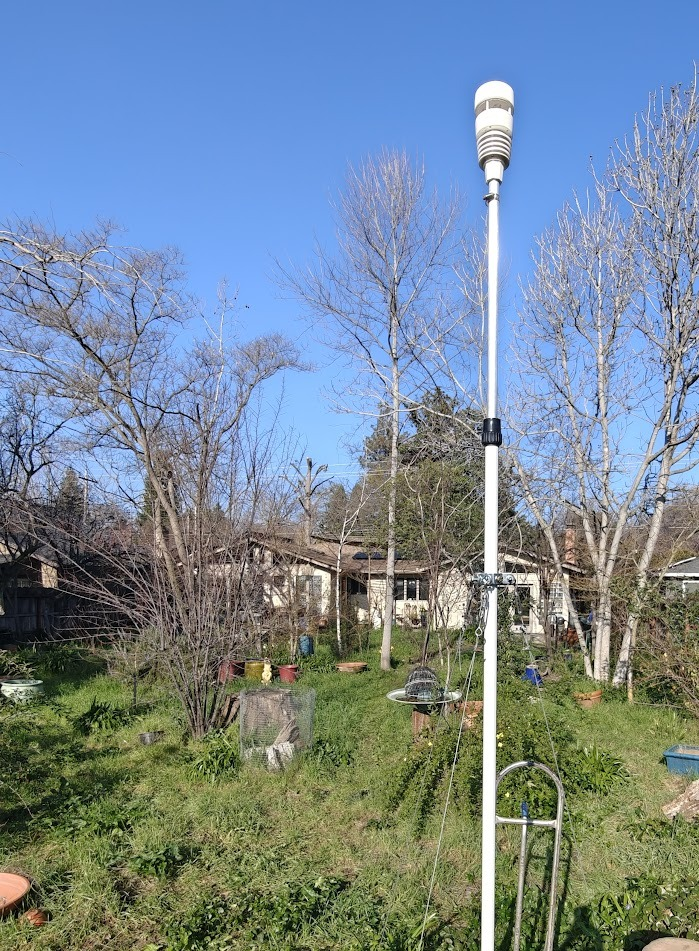
Hey, if you have been following this blog for a while, you might remember that I had a weather station on Wunderground (formerly Weather Underground). I sold that one to my neighbor and upgraded mine to this, a new technology version of the same instrument with no moving parts. But it is now in a different spot. The place it had originally been was just off the right corner of my house, just about where that silver globe can be seen, if you enlarge the picture.
So, you might wonder, as I am wondering about now, why I moved it. While it was easier to move than to install, it still took planning and about 2 hours to make it happen.
I moved it because it was too close to both my house and my neighbor’s house to get a reliable wind speed and direction. My neighbor’s house is just to the left of mine. His weather station has consistently shown a northerly wind, while mine has indicated a southerly wind.
So why should I believe his station is more accurate than mine? I can actually see his directional indicator showing a northerly wind. Why does his station suggest something different? It has to be because it is about ten feet higher than mine. So, maybe I should raise mine higher. Yeah, I don’t think so. I gained an extra foot in elevation just in the move. And out where it is now, I can feel a definite wind from the south. I couldn’t feel close to my house. Further improvement in my station accuracy is about raising it, which I may be able to do once. But these things require periodic maintenance, which means I have to lower them regularly to a point I can reach on a ladder.
I have a tall enough ladder for that, but since I live alone, I don’t trust myself to do maintenance without a “spotter.”
I am writing my tenth “work in progress.” In it, my main character is realizing why he exists. Hmm. I guess I am in the same boat as him.
After a fulfilling life with my wife Judy for 36 years, she passed away in 2019. I was faced with the choice to move ahead with my life. Writing has been, and still is, a major reason I have been capable of doing that. Now, I have rekindled an old interest of mine. Actually, it involves two things I have been interested in and had left behind.
Being a caregiver for a spouse with a long-term illness puts everything else on hold. But these two interests were put on hold shortly after we met. The first one was that I had enjoyed seeing local bands around town. Originally, we did things like that, you know, in the guise of “dating” even though we were already living together. She liked the music, but not the crowds.
The other thing was a hobby I had since high school: photography. It quickly became more about snapping photos to document our time together. I have thousands of pictures of her and us together. I am thankful for that.
So, how did I combine an old interest with an even older hobby?
I go to local venues where bands play and take photos and videos (now possible on every smartphone). What do I do with them? I share them on a Facebook group that promotes local music.
It is another way to create. I find myself increasingly aware of seeking the best camera angles. I also watch the band’s leader to see who will be taking a solo. This helps me focus my videos. Additionally, I watch for their cue that the song is about to end.
It is the most fun I have had, other than writing, in well, since Judy’s death.
Writing is solitary. It feels amazing. The work I have been doing for six months to a year is finally coming together. Soon, I will start another novel.
Sharing music videos and photos of bands is extremely social. Sure, it requires you to be out and about among the crowds, which my wife wasn’t comfortable with. But those crowds are now what I enjoy most about the experience.
Because I share something they enjoy on social media, they can see my videos there. People in the audience recognize me from posts about gigs they attended or played at. They come up to me. They thank me for what I am doing. They ask if they can join me at my table. Some of them have become good friends.
I believe Judy, wherever she is now, would be proud of me and of how I have reinvented my life.
So, the current Work in Progress will be my tenth novel.
It has occurred to me that it could be the last in a series connected by recurring characters. Maybe that is one reason I am writing it so slowly. I remember how I felt when I finished my first one.
A few of my characters had introduced the potential for more work for themselves and for me. The first one became two. With the third, I thought that series was finished. If I was emotional after the first, you can imagine how it felt when I finished the trilogy. By the end, my main female character, Emily, had lost her husband. I felt bad about that.
Starting the fourth, I intended to make it completely different, with all-new characters and a different setting. At the halfway point, I realized my main male character, Matt, had strayed from the script. He was about to do something I knew was out of character for him. It was also out of character for me. So I did something I hadn’t before then. I deleted several chapters. I rewrote them. I knew my Matt had to meet someone to set himself back on track.
I knew exactly who he should meet. Emily had lost her husband at the end of my trilogy. I wanted her to have a happier ending. I also knew she should be part of my fourth work and any future Works in Progress I create.
Writing is an adventure I never considered I could do, or that I would have so much fun doing.
Part of Discovery Writing is a lot of fun. I get to be the first one who knows where my story is going. But that is also the hardest part, especially at the beginning of a new piece. I thought I had an idea for an overall direction for this new one before I started. It has already veered off of that, and I am only 8,000 words into it.
8
Jake
I wish I could fall asleep as easily as Susie had.
She had been so cute, playing her game with me earlier. Then it was as if someone threw a switch, and she was out in mid-sentence before she could tell me—
Tell me what? That is the problem. Did she really know anything about my father and me? Something I have forgotten? I mean, sure, my father wasn’t what we would call “present” in my childhood, by today’s standards. Had she simply intuited something about me from my expression, or was it more than that? I mean, since she could suddenly see things that most other people couldn’t, my mom and Thomas, for example—Thomas, whom she had never met. Because he had died before Rose and I decided to start a family.
What time is it—
“Daddy, you are overthinking this—time as you are thinking about it, isn’t really a thing. You should know this already if you remember what my Gramma Emi talked about.”





 Memory is the Key