Contemplating the future is probably not the most sensible use of my time, but it seems to have been foremost in my mind recently.
It makes no sense, really. It will be what it will be. If in my past, I had known of and contemplated the details needed to reach this particular present, I might not have ever made the journey necessary to actually be here, now. And as odd and complicated as the journey has been at times, and as difficult as certain potential future outcomes may now be, I wouldn’t change a bit of it, even if it were possible to do so. Being here, now, makes it all worth it.
And as much as the future has been on my mind recently, I am now able to say that I am totally at peace with it, however it plays out.
The future will happen, no matter what I do or say. It will do as it will do. And with my past record of trying to control things in my life, I am willing to give any power I may think I have now over to the future to control it all.
So far, whoever or whatever is in control has done a pretty good job of keeping me in the game. The future may take away people or things, but eventually it gives back.
This hyperventilating hike in the forest was only the first of many threatening situations during this summer. Aside from my “brush” with heat and hyperventilation, it just seemed the summer was out to get me. Eventually, I became acclimated to the heat and altitude, but the summer still caught up with me when I found out that my wife had been having an affair with a co-worker, someone I thought I could trust to keep an eye on her while I was gone. Well, he did keep an eye on her, I guess.
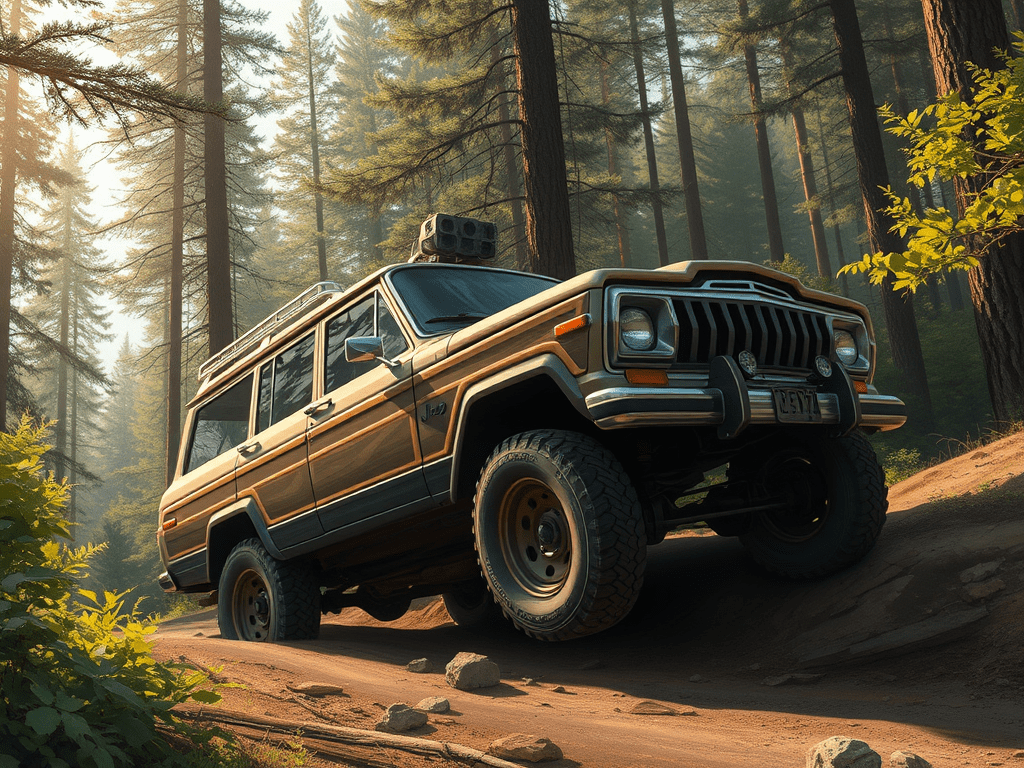
In the middle of my time in and around Big Bear, my work crew decided to fly home for a long weekend. There were no vacation days, so flying home meant we had to work extra hours each day to make up for the time away. On the way to the airport, we had to stop at UC Riverside to pick up our Wagoneer, which had been left for scheduled maintenance the week before. When we showed up, we had to catch a plane. The Jeep Wagoneer was not ready. The mechanics assured us it would be ready. Scott, our main leader, the one who I chased up out of the canyon, joked that as long as the wheels did not fall off on the trip, any way they could speed the process would be appreciated.
Ah, humor. Sometimes it can be refreshing. Sometimes it can portend the future. I was nominated to drive from Riverside to the airport. I remember so little about things down there. What airport was it? Ah, it must have been Ontario. What I recall about the trip was an initial stretch of freeway driving at 75-80 mph. At a certain point, you exit to the right and reduce speed to 45 or so for a rather long transition ramp to the next part of the trip, which is another stretch of freeway. In the middle of that reduced-speed section, the front passenger-side wheel suddenly came off.
I was very lucky that it stayed on as long as it had. A few minutes earlier at 80 mph or later, and in traffic, who knows what might have happened? As quickly as I could regain some control and move to the shoulder, I stopped, and we all got out to survey the damage. The wheel had been caught up in the wheel well, and luckily, the hub cap had caught all of the lug nuts that had come off. The problem was that, during loosening, the wheel had worn out a large section of the threads on the wheel studs. We jacked it up and attempted to get it back on. Basically, we could only get the lug nuts at best halfway on, and some not even that far. If we went on, it would be a slow trip. But we had no choice. The real damage to the wheel had already been done.
We decided to limp into the airport if we could. If we made the flight, that would be great. If we missed it, we would just have the university put us up or send a car for us. They owed us that much after nearly killing us. I drove the rest of the way at 20 to 25 with all lights flashing. Still, people drove by honking and pointing to the front of the car as if we were not aware of the trouble. The thing was trying to shake itself apart. “OK, Thanks for pointing out the obvious!” Where were your warnings before the wheel came off? We knew there was a problem. We finally got to the airport, still in time for the flight. Scott called the university garage and yelled at them for a while. He then told them where they could pick up our Jeep Wagoneer, and that there better be a car there for us when we got back. The flight to Oakland was without any further trouble.
The main thing I remember about this weekend was a dinner with my wife and our friend (and her co-worker) Steve. It was almost like I was the third wheel. I had the impression they had been spending a fair amount of time together. She seemed happy to see me, but there was an edge to it. She was not aware of what I had been doing, and I was not really aware of what she had been up to. But Steve seemed to know quite a bit about how she had been spending her time. It made me feel like I was intruding on them. It was like I usually feel when I am the only one not drinking at some gathering. I am there, but I am not really a part of things because I do not have that drinking experience to share. They sensed it too. I was an outsider. But, in the end, I was the one who went home with her. It had to be that I was just overthinking the situation. All too soon, it was time to leave again. We said our good-byes, and before I knew it, I was meeting my co-workers for the return flight.
This return flight was the very last time I ever flew. I know I am overreacting to this, but I just can’t face getting on another plane, even now. I know there is a greater chance of being killed in a car or twenty other different ways than getting “it” in a plane. Knowing that does not help.
Our flight back started out fine. It was a beautiful day. We were wondering if the Wagoneer had gotten fixed. No one seemed to think it had, or if it had, we wondered what would fall off now. Just my luck, I finally had a window seat. The plane throttled down, starting our descent. Suddenly, we just dropped. The next thing I was aware of was hearing the engines revving back up to regain some speed and lift. From the sound and the appearance of the wings, it was quite a strain. Of course, we made it. Later as we taxied towards the terminal, Scott leaned forward so he could see us all, and said, “Well. . . That was certainly exciting.” The summer was not through trying to get me, though.
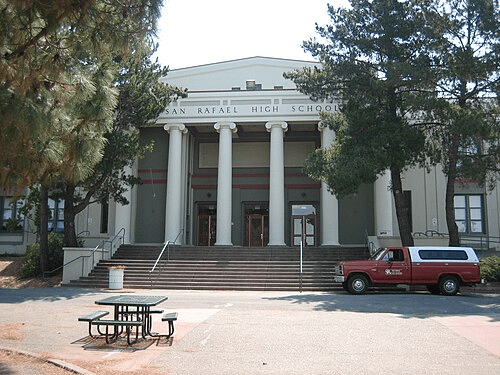
Things were always changing in my younger years. The Beatles had just stopped being the Beatles, or so it seemed at the time. Robert Kennedy and Martin Luther King Jr. were both killed at a time they had so much more to offer, at least potentially. The Vietnam War escalated. College tension increased. Riots and protests happened more frequently, and the whole world was watching. Then, peacefully demonstrating, students were shot at Kent State. The first Earth Day happened. We landed on the moon. I had a girlfriend. I was accepted to Cal, Berkeley. Then I was alone again. It was a really strange time. And it all seems like it happened to someone else now.
It was probably a natural thing for me to try to be different in some way when I was in high school. I grew my hair long and tried to grow a beard. I may have looked like the stereotypical hippie, but that was as far as it went. I dressed appropriately, I went to classes, got good grades, and did not smoke or drink. I did not touch anything that was not legal. It was just the hair that was odd about me.
I remember one time walking up the street where we lived, and an older lady walking towards me on the same side until she saw me. She detoured around me, walking out into the street so she would not have to share the sidewalk with me. I was dressed neatly, always had clean, brushed hair. It did not matter to her, though. It did not matter to her how well I was doing in school or that I was going on to college. She would rather take a chance of being hit by a car than have me any closer. She had the most extreme reaction to me in general that I remember from that period.
On April Fool’s Day in my senior year, I stuffed my hair into a wool cap and went off to school as if nothing was different. People came up to me in shock that I had cut my hair. It was a fairly cool day, so no one seemed to question why I suddenly refused to take off this cap. My head had to be cooler with the lack of hair, so it all made sense to them.
Suddenly, all of the sports jock-types, who had also started growing their hair longer, came up to me in awe of the change. ‘Why?’ they would ask me. Why did I do it? A couple of my teachers made comments like ‘welcome back to the human race’ to me. I took all of these comments in. I thanked my teachers for being concerned about me. I told the jocks I just needed a change. No, go ahead and keep your hair long. I do not care that some of you, as recently as last year, used to imply that you thought I was gay because my hair was long. My girlfriend and a couple of my closest friends were in on the joke They helped make it more believable for everyone else.
I walked home and took off the cap.
The next day, a miracle of miracles, my hair had been restored. I thought the punch line the next day was hysterical. Not all of them appreciated my sense of humor.
I did a couple of other practical jokes in my high school years. One time, I pretended to have just lost a contact lens in a hallway that was soon to be inundated by students passing by on their way from one class to the next. I had a bit of help here, too. A couple of students walked by before the rush and stopped to ask me what I was looking for. They were soon helping to look, and they were the ones who tried to stop the flow of passing students. Once it got crowded, I just lost myself in the throng of people and left them to look without me. I had never worn glasses at the time. I guess that detail never occurred to those who initially stopped to help me look.
Every Friday, fliers would be posted in the hallways advertising a party that night, or whatever night it was. Some of them would say that the parties were “unbustable,” meaning they involved drinking and other unsavory or illegal activities, but rest assured, no police would come to stop it.
Once, I set up an imaginary “unbustable” party. I had never gone to one of the advertised ones, but I had plenty of examples of what to say in my flyer. And I had known a perfect place for such a party. At least, I knew a place out in the hills on the map with existing roads, up to a point. After that, who knew? I hand-drew the map to the party spot well enough to get the party goers to the point that the road disappeared on the real map, and then I just drew a couple of more turns- totally free of any link to the real world. I added the details- the time and the day. Of course, this was the extreme party of the year, and would be totally “unbustable.” I guaranteed it. I made a copy or two and put them up in the usual spots.
I am not sure how many fell for my fake party and tried to follow my directions to it on a map that was only real to a certain point, but I did hear a few people I knew had been to several other parties like the one I advertised, talking on the following Monday morning. They were so disappointed because they had never found the party they had planned to attend the previous Friday night.
People generally liked me when I was in high school, but I was not always aware of it, or of them. Going to reunions as I have over the decades, the one thing that impresses me is how many people come up to me and thank me for being there for one reason or another. The odd thing is that there are an awful lot of them that I really do not remember having been there at all.
The first reunion I attended was the tenth. It started then. I had not even gotten in the door when a brother and sister came up to me, whom I had no memory of at all, even in that short ten-year span. They thanked me for my contribution to the yearbook and to their memories. At the same time, some had totally ignored me, even though I had classes with them and sat near them. They had no time then, and no time now. One thing that has happened over the span of reunions, though, is that more and more people come up to me who I never thought would have given me the time of day back then. And those people thank me, just for being a calming influence, or for my work in the early days of organized recycling, or for the pictures in the yearbooks.
Some women have even asked me why I never asked them out. Do you remember me? I remember you. It’s funny what you find out at reunions. One woman I had a crush on back then came up to me and greeted me in a way that made me wonder what the hell I had missed back in school. It was nothing really, just friendlier than I remember us being back then. It turned out that she thought I was my brother. I knew it! I do not think we look that similar, but she may have been drinking a bit at the time. One other lady, whom I had actually considered asking out back then, asked me why I had never asked her out. She then told me that my brother had asked her out, and her mother had forbidden it. Not that she had really been interested in him in that way. My brother again. I was not that humiliated. He wasn’t in our class, so why would he have even been there?
At my thirty-year reunion, prominently displayed at the class sign-in table, was a collage of photographs of “senior memories.” One of the pictures was from the senior class edition of the newspaper. In our paper, we had categories like senior couple, most humorous guy or girl, etc. I am sure many high schools have similar traditions for the graduating class. Seniors were asked to submit and vote for who they thought should be in each category. I was voted to be the most mysterious man. The most mysterious woman was named Jane. And, she was so mysterious; I had to admit that I really did not know anything about her when she showed up for her picture to be taken with me. She did not know me either. The perfect mysterious couple. For our photo, since the category was ‘most mysterious’ and I was the photographer, I asked her if she minded if I took pictures of our shadows on the ground. Wanting to be mysterious, or maybe just not wanting her picture in the paper, she agreed. It had to seem to others that this was a really creative way to do this picture, but it was really out of necessity. There was no one else there to help take the picture.
It is interesting to discover how many in my high school class remember me. I would not have thought anyone really would have a reason to, aside from the pictures I may have taken of people, events, or places that they now have in their yearbooks- if they still have them. I did not think of myself as someone that anyone would remember back then. I must have had my moments, though.
There were several, though, who only wanted information about what my brother was doing now. I wonder if people in his high school class asked him about me?
It was the end of my time at the Cal Berkeley School of Forestry. Classes were ending. Graduation was coming up, and with it, my trip to the south to work as a pathologist on a long-running Forest Service/Cal Forestry joint research project. I was actually going to miss going to school. I was just getting the hang of it and actually managed a few A’s in my final couple of quarters. My parents came to my graduation. My wife did not attend her ceremony, so her parents did not come to the graduation. She was continuing to higher degrees anyway, already getting into her master’s program and research. I was packing up to drive to San Bernardino to spend the summer as a forest pathologist.
Our base camp in San Bernardino was at Big Bear Lake, at the Timberline Lodge. There were two crews, each one with a lead forester, a pathologist, an entomologist, and a smog rater. The project involved driving to an initial plot area and hiking to a designated dead tree noted on aerial photos. We would then rate the area for overall cover and forest type, and try to determine the causal agent in the tree’s death. The smog rater would choose a few live trees in the area and rate them for smog damage. They were trying to relate smog damage to the trees’ weakness and, by extension, to a specific problem that had caused the tree’s death. The project had already gone on for a couple of seasons before I joined. A couple of years later, I heard the data was all in a bunch of boxes waiting to be analyzed. As far as I know, it is still waiting. The program had lost its funding by then.
The first thing I realized after starting this job was that I really wasn’t in good enough shape to hike in high-altitude heat and smoggy conditions. No wonder the trees were dying. They lived in a pretty close approximation of hell. This lack of conditioning first showed itself when I was always the last person to reach the site we were hiking to. This was not a real concern, though. I am sure someone is always last, and I was used to it. It didn’t occur to me then, but the rest of the crew had already arrived before I had. They had a chance to acclimate to the heat and altitude. I didn’t.
Where my lack of conditioning became a problem was fairly early on, when we were hiking out of a site back to the jeep for lunch. The “trail” to this particular site was extremely steep. Since the others on my crew had been there the year before, they were more used to the terrain and heat than I was, so they made a game of it on the way out to see who could be the first one out. Of course, that left me behind in an area of 7 ft high manzanita.
I was OK at first. There was a narrow path. But it did not take me too long to get into trouble. I missed a turn, and suddenly the path that had been small to begin with was completely gone. I could hear them ahead, so I assumed they had to have gone this way. I was wrong. I struggled a bit in the brush, then realized I could no longer hear the other crew members.
It must have been near 100 degrees, or it seemed so anyway. There was an ongoing smog alert. When was it not smoggy here, I wondered? I was literally in over my head. I had trouble moving forward. I had trouble moving back down the way I had just come. And since I knew at this point that I had missed something, I figured I only had one direction that made any sense to me, and that was up. Going back down or to either side would just tire me out more, or I might be going away from a clearing or the resumption of the trail.
I called out, but they were too far ahead to hear me. The water in my canteen was so hot that it did nothing to quench my growing thirst. I realized that I had stopped moving at all, and the thought crossed my mind that I might just die out there on that hill. Even knowing that, I did stop. It took all my will to start up again.
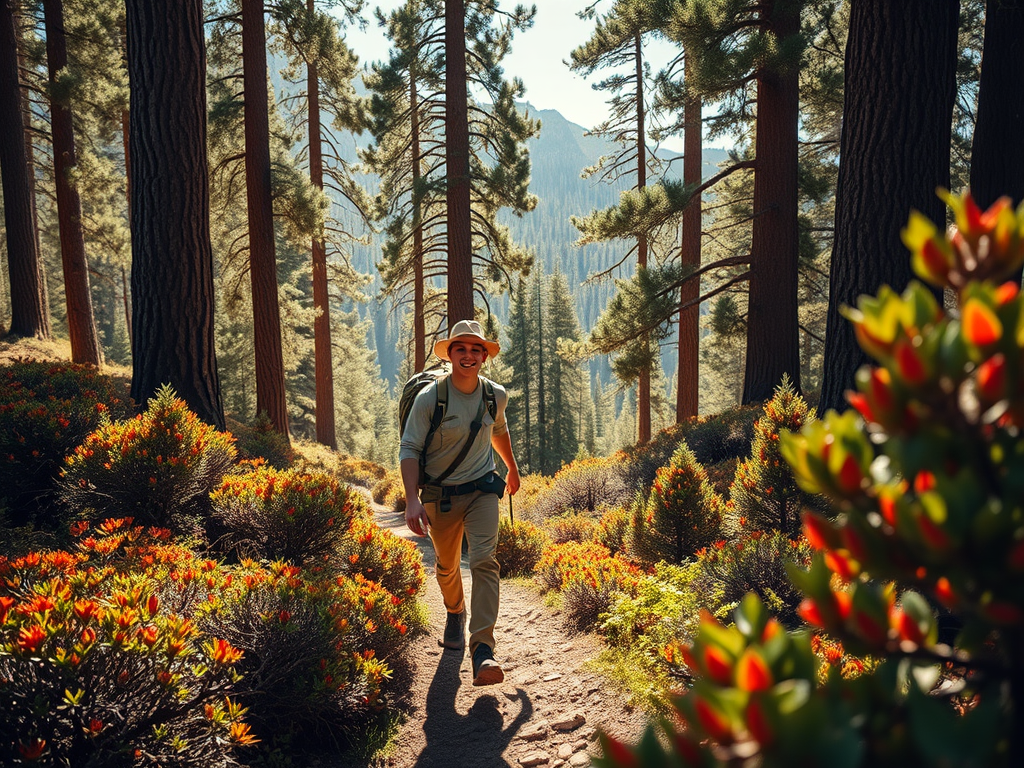
Somehow, I got up the strength to push on uphill through the head-high manzanita. At times, I was up in it, actually off the ground. It made it a bit easier to see ahead, but not being on the ground is also harder on your feet. My legs were already weak from this struggle, and I was starting to hyperventilate. Something at this point must have taken over. I really have no idea how I got through it, but suddenly I was free of the brush. There was still no path, but I just kept climbing. Eventually, I got to the top of the climb. I had no idea at that point which way to go to our jeep. I just started walking. And I use the term loosely. I was dead on my feet. My legs were barely moving, feet dragging. I knew I was breathing too shallowly and was losing control of how I was breathing, but I had to keep going.
All of a sudden, I walked into a clearing, and there was the jeep. Everyone ran over to me. I went to the ground, grabbing into my vest for a sample bag to breathe into. I got hold of one, and they took it away from me. Next thing I knew, I was in the back seat of the jeep, and they were driving like a bat out of hell to a hospital. In the back seat, I knew I needed to breathe into a bag, but my extremities were so numb at that point that I could not get one. I must not have been able to talk to them, because I would have told them what I needed. Finally, we get to the hospital, and the first thing the nurses did for me was put a bag up against my nose and mouth and tell me to keep breathing as normally as I could. I knew what I needed. My crew had already let me down, and when I tried to fix my problem myself, they just let me keep hyperventilating. Some crew I had there.
My breathing got better, and my numbness disappeared. When the hospital crew was sure I could function, they let me go. Work for that day was done. It was a Friday; time to rest for the weekend. My crew had some phone calls and reports to make about what had happened to me, and how they would ensure it would not happen again. No one ever asked me my side of it. I would have told them my crew members had left me in the canyon and had failed to make sure I was behind them. Then they had continued to the jeep as if nothing was wrong. I was surprised I had made it to the jeep. I had no clue where it was compared to where I came up out of the canyon. Evidently, they had been honking the horn since they realized I was not right behind them. I had been so out of it that I had no memory of hearing anything.
The summer continued. Later, we had to go back to that plot to re-take certain data. It was equally hot and smoggy. Some things had changed. Now, there had to be someone behind the person least able to keep up with the group. They made jokes about me keeping up with them on the way out. But I was no longer the weakest of the group.
I was acclimated by then. I kept so close to my “leader” on the way out that I was literally at his heels. He knew I was right there, and the competitive instinct of this clown made him go even faster. I kept up with him, no matter how fast he went. When we got to the top, he doubled over, hands on his knees, panting. I stopped for a moment to ask if he was OK, then kept walking. Either my conditioning was improving, or he was drinking way too much beer after work.
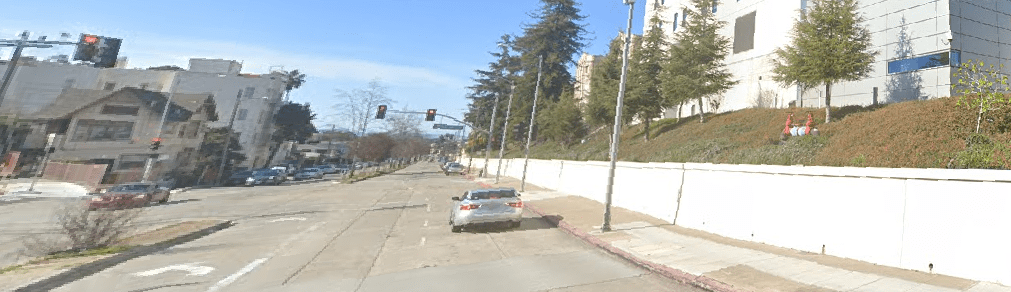
After I realized my forestry career was over, I lived in Oakland, CA, for a short time, across the street from Highland Hospital. I remembered hearing back then that, generally, this wasn’t a very safe neighborhood. And that was without the proximity to Highland Hospital generally. Specifically, my apartment was just across the street from what is currently labeled Highland Emergency Medicine on Fourteenth Avenue.
I think my apartment building was just down the street on the left. Image from Google Maps Street view, added Jan. 24, 2026.
I remember that my apartment complex offered me off-street parking. Still, I never used it because I felt less safe back in that secluded parking area than I did out in the relatively open city streets, even if my parking space was adjacent to a long expanse of Highland Hospital very close to the emergency entrance that was used for the most part for people injured in fights, drug overdoses, crimes of all description, or during encounters of some kind with the Oakland Police. For all of the activity of that kind that must have gone on, I was only rarely aware of it.
One otherwise normal morning, I crossed the street to my truck to start the drive to work. I got in and noticed my glove box was open, with some of its contents on the truck’s floor. The only thing I could tell was missing was a pair of prescription sunglasses. It wasn’t that much of a shock, considering the neighborhood, but it did put me on a bit more alert. There had been no sign of forced entry, so I assumed I must have inadvertently left the passenger side door unlocked. I started going down to inspect my truck at random times when I was home.
During one of those spot inspections, I had just checked the passenger-side door lock. It was secure. Before I could turn and cross back to my apartment building, I heard the heavy impacts of boots running towards me, and the yells of, “Freeze and get your hands up where we can see them!!!”
I was happy to oblige. Two officers were running towards me, both with guns drawn. I remained frozen until they got to me to explain what they thought I had done that would warrant such a dramatic entry on their part.
Hands still up and where they could see them, they demanded to know who I was and why I was trying to open the door to the truck we were still standing close to.
I told them my name and that the truck in question was mine. I explained, “I have noticed of late that the neighborhood is not particularly safe, and my truck has been broken into before. I was just checking to make sure I had locked it up before I went to bed.”
“Do you have your ID?”
They had calmed down a bit, but I still had my hands up. However relaxed they seemed, they had not told me I could lower my hands yet.
I told them, “My wallet is not in my back pocket. I carry it in my front left pocket. Is it OK that I reach into this pocket (I pointed) to get my wallet out?”
They said that would be OK, but even though I had told them my wallet was in my front pocket instead of the more common back pocket, I still kept my movements slow and deliberate. Their guns were no longer out, but they still had them. And I was also aware of how much bigger physically, each of them was compared to me. If they turned on me, it wouldn’t be much of a struggle.
Once they verified that my story matched the vehicle ownership and my address matched where I told them I lived, they told me the “why” of their stopping me.
There had been a “walk-away” of a person they had in custody and had brought to the hospital to have a medical exam. And, I looked just like him.
I looked just like him, and I guess, from a distance at night, with adrenaline pumping in both of them once they had seen me trying the doors on the truck, it probably shaded their interpretation of the event they thought they were seeing.
This happened forty years ago, and it sticks with me to this day.
And every time I hear of a person of color who has lost his or her life in the act of being apprehended by the police, I think back to this event, and how I instinctively acted when two cops ran up to me with guns drawn, yelling for me to freeze and keep my hands in sight.
I was lucky that night because I stayed calm. I was lucky I had my ID on me.
But since then, I have always wondered.
Had I been a person of color, would I have reacted the same way, having two cops run up on me with guns drawn? Or would I have learned by then that people of color are assumed guilty even if they are in the right?
Had I been a person of color, would they have acted the same way towards me?
I think the outcome would have been different.
I remember seeing them running to me with guns drawn, and at no time did I have a thought that I was in danger. I think I was lucky that night that I was white.
When I count the number of people in my life who have been truly good friends, I get a very small number.
There were many casual friends from my old employer. I used to see them every workday. Some of them I had known for more than 20 years. After that long, I would have thought a few of them may well deserve to be included as my good friends now. Of course, I have not worked for nearly five years now, and I rarely, if ever, run into any of them. Of the entire bunch, there is only one I still consider a good friend.
Old high school friends have a similar fate. I knew many then, but not that many close ones. There are only a few left today. Most of them I only see on Facebook. I get friend requests at times and have to look the person up in my yearbooks to even see if I used to know them. Most of the time, I am surprised by who requests from my old class. I was not even aware that most of them knew who I was back then. I guess in a way, they are at least social media friends, although I do not think I could count on many to be there in need as a friend can and should be. One I count as one of my best friends from that time; I rarely see them, and we live in the same town now. Another one I see only every ten years or so if we both make it to the same reunion. Even though we see each other that rarely, we still have a lot in common in some ways. And I know I can always call on her in a time of need.
Then, there was a really close friend whom I met shortly after I arrived in this area. If things had worked out a bit differently, she may have been more than a friend. But I was a bit late meeting her. By the time I arrived here, she was already destined to marry someone else. It turned out my time knowing her was very limited. This story may be written about later, but for now, I will just say that she was killed in an accident with a drunk driver.
A few friends are linked to my relationship. If my divorce was any indication, I am not sure those really count as my friends, no matter how long I have known them. I know of no one who was a friend before my divorce in any way now.
I do have one male friend that I think I could count on, maybe two. But most of the friends I have now are women. Why? I am not sure. Guys just do not seem to keep in touch. Or maybe it is just not accepted that a guy could help out another guy in a time of need, say, for support in an emotional upheaval after some trauma. So you just do not think of them when it is time to ask.
One thing I have learned recently, though, is that friends are still out there to be found. Although I may have stopped looking for a while, the key to finding these people is to recognize they are there and to pay attention when you see them. It may be as simple as that. And if you see a potential friend, try to not let the opportunity to get to know them slip away. Maybe there could be a reason for you to meet just at this precise instant of time. The universe may be trying to tell you something.
I can hear the collective groans thinking that this will be yet another post about my childhood. I will give it a rest for a while. Truly, it is not easy to rehash events from my youth. At least you can skip the entries that are of no interest. I have to relive not only what is in the post, but also the other weird memories or just feelings associated with that time. The majority of the “Then” posts were originally written more than ten years ago, and I have tried not to re-read any of that since then. Putting them on this blog requires re-reading and editing. It really is easier to read this than to edit the entries to put them into this format.
Why is this hard right now? Well, there is just too much going on in my real life. I find I do not have the room in my head for the thoughts that relieving my past has conjured. Memory is the key. I know what all these memories did to me the first time I wrote this stuff down. Some of the memories were good. Some were unpleasant but necessary for the person I became later (in the now). I fear I may find a door that I would rather not open right now. I will get back to it when I can better sort out what matters and what I can skip.
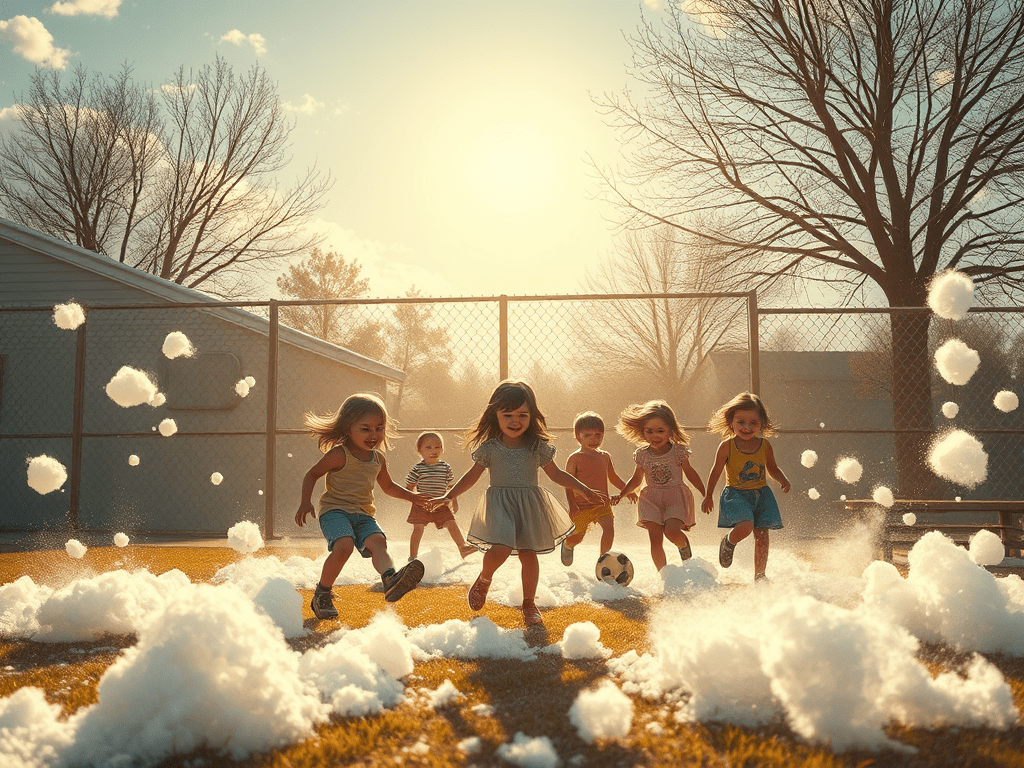
At some point, I had to go to school. I seem to remember watching my brother and sister get ready for school in the past, so it was just accepted that this was the next stage of my life. I walked with them. They walked me to the door of my area, which was separated from the rest of the school, and they went on. I went in. I do not remember a lot about what we did. I remember show-and-tell, but I do not remember ever showing or telling anything. It would have been a bit boring for them, I think, to tell them I was related to kings and Mayflower passengers, but I would have if I had known. I remember playing with the other kids using what the teachers of that time thought were the things kids needed to help them learn to associate with others. I remember playing outside, and the chain-link fence separating us from the big kids. I remember sitting against a wall in the sun, eating my snack, usually pieces of apple my mom had cut up for me, surrounded by the others, all with whatever their moms thought was best for their snack time. The apple pieces would be discolored a bit with age, but they were still good. There was a sewage treatment facility near enough that when the wind blew just hard enough, it would blow soap suds into the playground, like soft white tumbleweeds. I remember the air force base still being visible, but at a slightly different angle than from home. And at times, you could see the Nike missiles.
I guess for those under a certain age, that must not make a lot of sense. Anyone born after the mid to late 1960s would only be familiar with Nikes being the shoes they wear or want to wear. These were the kind of Nikes that used to be a part of our defense system- at least during the Cold War. As I grew older, I realized we were literally surrounded by these sites in the Bay Area. We could see one from my kindergarten playground, which must have been to the north near Hamilton Field. There is another one south of there, up on the hill between Santa Venetia and San Rafael. These bases were everywhere. I do remember seeing the missiles being raised for testing, or maybe they were just replacing older ones with the next new model that went further or did whatever they did a bit better. When we moved again, as I was starting first grade, the school I attended was adjacent to the main freeway. More Nikes. This time, on flatbed trucks being hauled to the bases so other kids could watch them being raised or lowered. Thankfully, I never saw one fired off for any reason, although when I was old enough to know what they were but too young to appreciate the purpose, I wanted to see one go off.
Back in kindergarten, I began to learn about life in new ways. It was not all fluffy white suds blowing into the schoolyard, or eating apples at snack time. There was serious stuff going on, like rest time. How weird is that? To be expected to rest lying on a mat, or with your head down on a table. This is not the first time I had to do what I was told without knowing why, and it will not be the last. But rest periods certainly did not last much beyond the first couple of years of schooling. I seem to remember being way past daily nap times at that point. Nowadays, I might see the value in doing it. Then, not so much.
I played house. I am not sure how often. But it is in there somewhere that I did it. This was complete with the fake miniature house. “I’ll be the mommy, you be the daddy.” How that came out, I can only wonder. That memory is not there. Hopefully, I would not have been emulating my father in any detailed way, or they would have thrown me out of school. Probably, I just stood there and did whatever the girl pretending to be the mommy told me to do, and wondered if going to school would always be so weird.
My mom did not drive, so she had to walk to the grocery store and carry the groceries back. Since I was the youngest and not in school yet, she brought me along. I rode in a wagon alone on the way over. On the way back, I had a bag or two of groceries with me. I thought of the wagon as being for me, but I think it was more for her. At the time, I was happy just rolling along. I remember there was a pickle barrel in the store. I thought it must be full of pickles. Later, I was disappointed to find out that only a small part of it actually held any pickles. Not that I liked pickles, but I liked the idea of the pickle barrel being full of them. The store also had a butcher who cut the meat for you and ground the beef for hamburgers right in front of you. I remember seeing all this. At the time, it all seemed just the way it should be.
I remember a birthday at this house and a Christmas. The birthday is very vague. I got a model race car that my father had to put together. That was always fun. He did not have much patience for things that required instructions. Christmas became famous for the year we almost caught Santa in a Santa trap. The trap looked like a typical bear trap, but it was made of plastic. We set it into the fire grate in our fireplace, where Santa would be sure to step when he came down the chimney. In the morning, we went out to see the gifts, and there was a note from Santa scolding us for almost catching him. We knew it had to be real because a ripped scrap of red material was found in the trap’s jaws. He must not have been too mad since he left us presents anyway. Not that I remember what that consisted of at this point. My parents could be creative and fun once in a while. They just did not always know how to show that side of themselves to us.
Much later, before their divorce but after mine, they were living back in Utah. For some reason, they got the idea that we all would be coming out to see them for Christmas. They decorated the house like they used to, for our upcoming visit. They even got out some of our old childhood toys they were saving for their grandchildren and wrapped them to put under the tree. The problem is that none of us knew this was going on. I think my brother and sister were at least financially able to have made the trip if they had planned to, and could get the time off. I had the time off because I was not employed, but I had no way to get there. No money to do a bus or train, and no car in condition to make the trip. Thinking about them going to the trouble of decorating for this visit, they assumed at least one of us would make it, is a bit sad. But that is how things went sometimes. All those toys they had saved and carted around were intended for their grandchildren. All of that was eventually given to others or lost later, along with the home movies and a substantial collection of slides and other pictures of all of us growing up. All of it was gone; so much for boring my future kids with old images of daddy growing up. Not that I have kids, but if I did… As a result, I do not have much from this part of my life to show anyone who is now important to me.
I woke up that morning and turned to face her as usual. She was wide awake.
“I didn’t want to wake you up, but I haven’t slept all night. I need you to take me to the hospital. Now . . .”
If you knew my wife, you would know that this was a major deal. She did not take hospital or doctor visits lightly, and telling me she needed to go to the hospital now was a serious matter.
I don’t remember if I even asked what was going on at that point. It was “Now.” The explanation would follow. I remember telling her only one thing, “You should have woken me.”
She had trouble getting her shoes on that morning. I had to help her. She also had trouble getting her legs into my car. She later admitted to me that she had been trying to hide the fact that she had pain in her lower legs. So, it wasn’t just the delay in diagnosing that was against her. Even though she knew what to do and what to avoid in her condition, she still hid important details from me.
A pulmonary embolism is a big deal, but it can be treated. We were assured that this one was small enough to require only a few days in the hospital, with a prescription for a blood thinner, and that treatment could be finished at home.
A couple of days into her hospitalization, the routine morning blood test showed that she had had a severe drop in red cells overnight. This was remedied by the infusion of two units of blood.
A CT scan later that day showed no major issue that could explain the blood loss. I don’t remember if anyone officially explained this loss to us. My thought now is that it was caused by capillary leak syndrome, which could also explain the cough she had for months.
Capillary leak syndrome is not generally thought to be associated with the type of cancer she had, nor is it generally thought to be associated with the types of chemotherapy she received over the years. But there was one common factor in all of this that I realized could be a suspect in this case. Each one of her chemotherapy rounds ended with a shot of a drug to jump-start her white blood cell production to boost her immune system, which is severely depleted following any chemotherapy.
It was a commercial I saw on television for Neulasta. I recognized the name of the drug being advertised and listened to the possible side effects. This drug was linked to capillary leak syndrome.
Later that night, her pulmonary specialist called me to update her prognosis. He also told me of a conversation with her cancer doctor, who had told him that her “numbers” following her first chemotherapy against lymphoma were not good and that he thought there was a chance the lymphoma had gone to her brain, which would require a spinal tap to verify. The bottom line was that they could not continue to treat her for the blood clot and that the odds were against being able to continue lymphoma treatment either, especially now that her embolism could not be treated.
After I hung up from that call, I cried.
I cried, and then I screamed. And I cried some more. It was not to be a night for sleep.
Instead, I emailed a good friend with whom I had been sharing my wife’s updates, and later, reading her response to this particular update, I cried some more.
In the end, it was over very quickly.
She did make it home again, at least long enough to see our cat one last time and for me to clean up her hair, which had become matted during her hospital stay. I remember that her hair was the thing she was most worried about regarding her chemo treatments. She wasn’t concerned about the chemo. She didn’t want to lose her hair.
She fell that first morning back home and ended up in the hospital again. I tried to lessen the impact of her fall, but was unsuccessful. After a few days at the acute care hospital, she was transferred to a rehab hospital. The plan now was to get her strong enough to maneuver around the house with minimal risk to herself. And just maybe her cancer doctor had a plan to check into possible lymphoma in her brain.
She worked on her rehab for a while and seemed to be in better spirits. But the pulmonary embolism was impacting her blood oxygen levels and making her heart race to unsustainable levels. On top of that, her neck lymph nodes were getting larger.
And the amount of time she was lucid was diminishing daily.
At that time, she was lucid enough to recognize me and talk briefly; she told me she was sorry I had to do so much now and that she couldn’t help me anymore. I held her hand and tried to smile as I told her not to worry, that I would be OK. I saw recognition in her eyes that she understood what I was saying. I hoped that I would have more time to get into this, but she was already dropping back into that less aware state. Maybe later… Later came around 2 am the next morning.


 Memory is the Key