
A job not wanted, revisited- Part one

Sunday, May 24, 2020

I have put off writing this post long enough.

In early 2013, my wife had successfully finished her last round of chemotherapy for Chronic Lymphocytic Leukemia. We were told that she should not worry about CLL, even though her mother had died from this. No, we were told that CLL would not kill her.

And, technically, that was correct.

In the end, it was a combination of things.

In the summer of 2018, she told me the lymph node in the side of her neck was growing in size again, much faster than it had previously. And that it felt different to her, this time. We called her doctor. He said not to worry, that her numbers were good last time, and just keep an eye on it.

Keeping an eye on it was easy enough to do at the rate it was growing.

We called again to ask for an earlier appointment. No, her doctor didn’t feel it was necessary. The appointment was only a couple of weeks off at this point; it should be OK.

We got a second opinion from her ear, nose, and throat specialist. He measured the lymph node and sent his report to her cancer doctor. Still, the appointment was not moved.

We got a third opinion from the ER doctor at the very hospital that housed the cancer center. The ER doctor spoke to the cancer doctor, and he told us that they had agreed to move the appointment up and to call the office on Monday morning.

Sometime over the weekend, he changed his mind. The appointment would not be rescheduled.

This became rather important later.

The morning of the appointment had finally arrived. November 8, 2018.

The morning appeared bright and sunny until we went out to my car to start the drive to the clinic. The details of this particular day are out there for anyone to look at, so I won’t go into those now. I will just say that we never got to the appointment.

And because most of the town where the cancer clinic was located was all but burned down that day, by the time her doctor had relocated and was taking patients again, a couple of months had elapsed. Even when they were taking patients again, it took another couple of months for the new diagnoses to be made.

This made it around 4-5 months from the time she noticed the enlarged lymph node that felt different from other times, to lymphoma being diagnosed. I admit that this one fact still bothers me after all this time. Her doctor had been the one to emphasize the importance of communication about any changes in her lymph nodes or other related issues, and he ignored them when they were brought up. My therapist suggests that it is important to let this go. The early diagnosis of cancer is key to a better treatment outcome, but it may not have made a difference in this case. And even if it had, it can’t be changed now.

And considering my wife’s other issues, this probably is correct.    

She started the preparation for her new rounds of chemotherapy as soon as we could, once she had the new diagnosis. We were assured that this new diagnosis was a good thing, since they could cure lymphoma. We were told there was an 80% chance of a cure, and with the addition of stem cell infusion after the cancer was in remission, she would have new bone marrow to go with it. She never got there.

Halfway through the pause between first and second treatment, this plan for beating lymphoma ran into a snag.  

See- A job not wanted, revisited- Part two
Not a job wanted

The alarm clock is beeping. You were right, this month it really is darker than last. The reason for the alarm waking us up so early one week each month is never far from either of us, particularly for you. It is time to start the next cycle.

We dress, do a quick breakfast, and try to make things as “usual” as any other day. But I know how hard it is for you to think of anything being “usual” anymore.

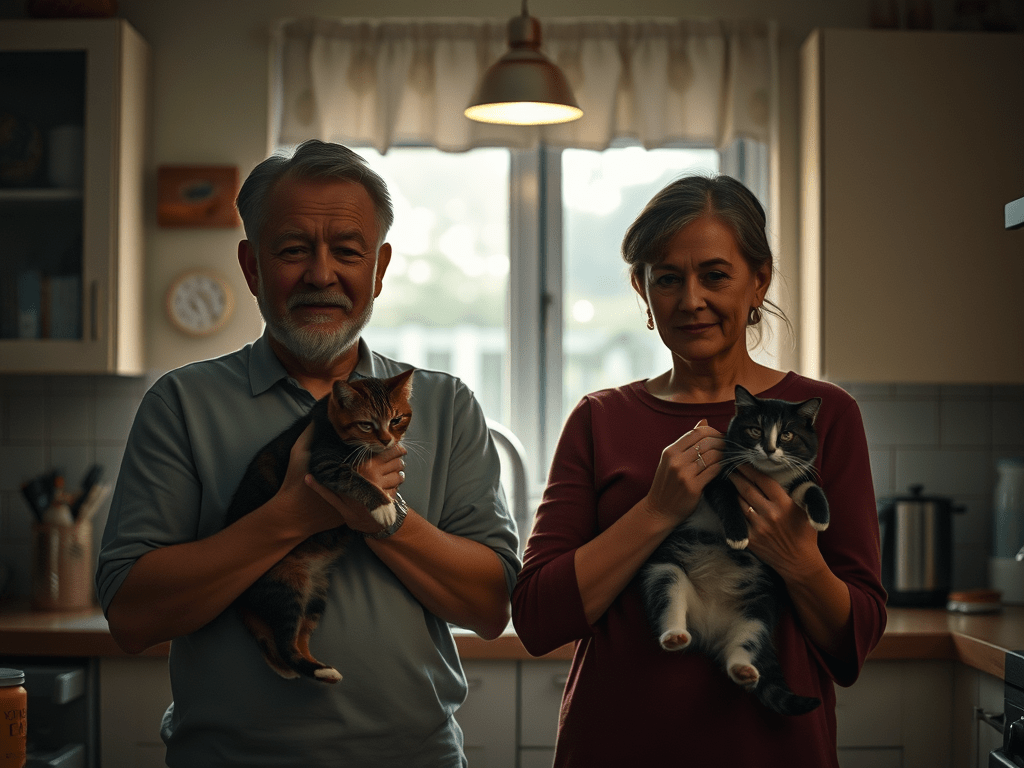
The cats do not understand why it is still dark as I let them in for their breakfast. ‘The humans must be nuts,’ they must think. They eat, but things do not seem right to them either. They are up early, but they still cannot go outside until it gets a bit brighter.

They clearly do not understand us.

Driving up the hill again is beginning to feel like a commute. But this is not a job either of us would have wanted. This will be the fifth round of chemo. After this week, there will be only one more round left. By that time, it should really be dark during the drive to the clinic.

This next round will also be the last one for sure. And after that? Only time will tell. No one knows what will happen. All I know is that without this treatment, you might not be here now. As hard as it is for you to go through this, it seems to be helping. It is hard for you to believe that, though, as we drive up to the clinic this early in the morning. You still have to get through this week’s treatment before we get to the last round next month. You will make it to the last one, though. I was not always sure of that.

Getting older . . .

I will be the first to admit this. I am getting old. I see it and feel it every day. This is not so bad, really. I know it is inevitable and irreversible. I appear older than I actually am chronologically. Thinking back, this has always been the case. My voice deepened earlier than most other boys. I grew a beard earlier than most in my class. Appearing older than my age actually had some advantages back then.

When I was eighteen, I had a sixteen-year-old girlfriend. When we could afford it, we liked to go to The Magic Pan in Ghirardelli Square, San Francisco. We would order a dinner of crepes and a nice glass or two of white wine. I guess she also appeared older than she was. I did not abuse this ability to drink underage without being “carded.”  In fact, I only did it a couple of times with this one girlfriend. Maybe that time in the 1970s was just a bit more relaxed when it came to restaurants checking people’s driver’s licenses to see if they were of legal drinking age.

Now, nearing 60, my one-time red beard is close to white: OK, it is white. I still look older than I am and older than I feel most of the time. (But I have to admit that I am starting to feel as old as I look.)

Recently, I was out shopping for household groceries. I was in the checkout line of a natural food store in town. This nice-looking, younger woman was running the register. We chatted a bit as she entered my purchases into the system. She told me the total, and I ran my card to pay. Something about this seemed off. My total was less than what I had been predicting in my head. Outside, I quickly dug out the receipt. The entries looked right. Then I saw it. Down at the bottom of the receipt, I saw the words, “Senior discount applied- You saved this much money.”  What? Senior discount? She thinks I am a senior?

This was traumatic at first. Sure, I must be close to their senior discount criteria, and I know I have always looked older than I am. But do I look that old? My inner youth screamed in agony.

Now, when I go to that store, I try to remember which cashier thinks I am old enough to qualify for their senior discount. It is not much, but I find I want that discount. But I must be getting old. I can’t even remember which one of them gave me the discount, and that was only a few weeks ago.

Earliest Memories

The earliest event I am pretty sure I remember from my own life happened when I was around 4 years old. I remember being taken out of our house and being put into a boat. The water around us was brown. The boat was yellow with a black trim. I could see the tops of fences that were still above water. As a family, we had been flooded out of our home in an area where flooding was no longer supposed to happen. My family always figured this was not a real memory of mine, but a construction based on hearing stories about the flood in later years. I wonder about that because they do not remember the details I remember. They remember me as being upset that I could not stay in the house and play in the water with a toy boat. I wonder if I could construct the part about being taken out to safety. Why would I not build a memory of wanting to stay and play in the water, an event they told me about? Memory is a funny thing.

Shortly after that flood, we moved. This, I remember, and I am sure of it. I remember being in a dirty, beat-up pick-up truck. We are driving along an unpaved road. It is smooth, but dirt nonetheless. There are houses on either side. We stop at one. I do not remember knowing what was going on yet, but that house was the next one my family moved into, in an area called Santa Venetia, in Marin County, California. I have seen pictures of this later, but they were in black and white. My memories are in color. The houses were newly built. No lawns in front. No trees. The street was not only unpaved but also ended just down from our house, blocked by a barrier.

On the other side of the barrier, open space stretched all the way to Hamilton Air Force Base. The field was largely unexplored by me in my short time at that house. I remember being in it to fly kites, and just a short distance to explore the things a kid of 5-6 would want to explore. But, frankly, I am not sure I would have wanted to go much further. Maybe this was due to my lack of understanding of distances. That Air Force Base I know now was at least seven miles away. It has since been closed. At the time, though, it was very active, and I think I was afraid of getting too close to it- like a five-year-old kid could walk seven miles through a field, and wander into a sealed-off military area. The bigger kids in the area went farther out. But, I knew I was not old enough to go where they went, yet. So, I watched the planes doing touch-and-go landing practice, not knowing what that was at the time. It was just fun to watch them take off, fly around, and land again. I listened to the jet engines roaring in the distance. Why would you want to be closer anyway? It sounded like they were already too close. Pilots would fly from the airbase over our neighborhood, providing endless hours of fun for a kid. Sometimes they would waggle their wings, making us think they were waving to us. I would wave back. I doubt they saw me.  

Who I am and where I came from

If you do an internet search for my name, you will get many results for listings of people who share my name. Some may even be related to me. There is an actor, a writer, a photographer, a painter, an equestrian specialist, a bass player for a jazz quintet, and many others, all sharing my name. I am not any of those people, but I could have done some of the things they have done in their lives.  I have done nothing special yet. Well, not special in any way that would have made anyone recognize who I am.  If you look deeply enough in a Google search, you might find me; it appears I have at least one promising result returned for the SETI @ Home project. You probably know that they are searching for some indication of non-natural radio signals out in the rest of the cosmos. This was the first use of a project utilizing millions of individual computers connected by the internet to receive small data packets and transmit the findings back for further analysis after running a program to process the data. I also have a few hits on an internet hybrid car group. No cure for a disease. No million-dollar lottery win that was then given to charity, yet anyway. I am no one in particular. But it occurs to me that, even though you do not know me, I still have a story.

I was born towards the end of what has become known as “the baby-boomer” generation. It was the Cold War. The words “Under God” had just been added to the Pledge of Allegiance. There was a Communist under every bed. No doubt Soviet Nukes were targeting every major city in the United States, perhaps even where I now live. And we, no doubt, had just as many – or more- targeting them: I know there was a ballistic missile silo near here, but it was decommissioned before coming online. Of course, at that point, I knew nothing about any of those things that were a part of what would become my early life.

There were some in my family long ago who were of note. Evidently, my genealogy goes back to the first Plantagenet King, Henry II, and his wife, Eleanor of Aquitaine, and, before that, to William the Conqueror. Hey, I do not know for sure. It is in the book of my family roots, researched by my great-aunt, who had done similar projects before. She sounds very convinced that the evidence found in her research on this link is real, and I do not think that she would have stretched anything just to make it a better read for the few people who have the book. But, even if this part is not true, I am directly related to settlers in the New England area around 15 years after the Mayflower landed. The head of the family at that time was a minister (although not ordained). The early settlers needed a minister, and ordained ones were scarce, so they accepted him. He was granted some acreage in what is now Hingham, Massachusetts. A part of that land bears his name and is still shown in local history books. He was a mover and shaker in early American life. He went on to be an early settler in the community of Marblehead, Mass., served as a minister at the Old North Church there, and was involved in community affairs.

That same book shows that I am related to one of the original Mayflower passengers, Thomas Rogers, a signer of the Mayflower Compact. Although this is interesting if you are in my family, I am not sure what real value there is in this fact. At the time, any of these facts could have done me some good in early school years; things like “Show and Tell,” or, just as likely, report topics for school projects. I did not know anything about it then. All it is good for now is acceptance into the Mayflower Society, which charges an annual membership fee to maintain that status. I am not sure what else it is good for. They do give you an official plaque showing you are the real thing, after they verify the lineage that you researched and sent to them. Maybe they have a secret handshake, too. The information on the internet about the reasons you might want to join is a bit sketchy. Knowing it is true is good enough for me.

My father’s namesake was the first of the early New England ancestors to leave the area. Because he had a bad leg from polio, as the story goes, his family knew he would not make it as a farmer, so they encouraged him to cultivate his mind and attend high school, something that very few in those days could afford. He became a teacher and moved to the Illinois area, where he met his future wife, my link to the Mayflower. She was an older daughter in the family he was staying with. The family had invited him in, hoping that having a teacher living in the house would be a good influence on the children. He married the daughter and moved to Iowa, being among the first settlers to take advantage of President Lincoln’s loosening of the homestead laws. They went by covered wagon. I mention this for a couple of reasons. He is the ancestor that my father was named after. And he is the one I most resemble in the few pictures that exist of my early ancestors.